Login
Register

Moving IoT ecosystems are scaling fast, but networks are not designed to keep up. This Catalyst enables real-time, AI-driven orchestration of mobile assets, unlocking new revenue and more sustainable operations.
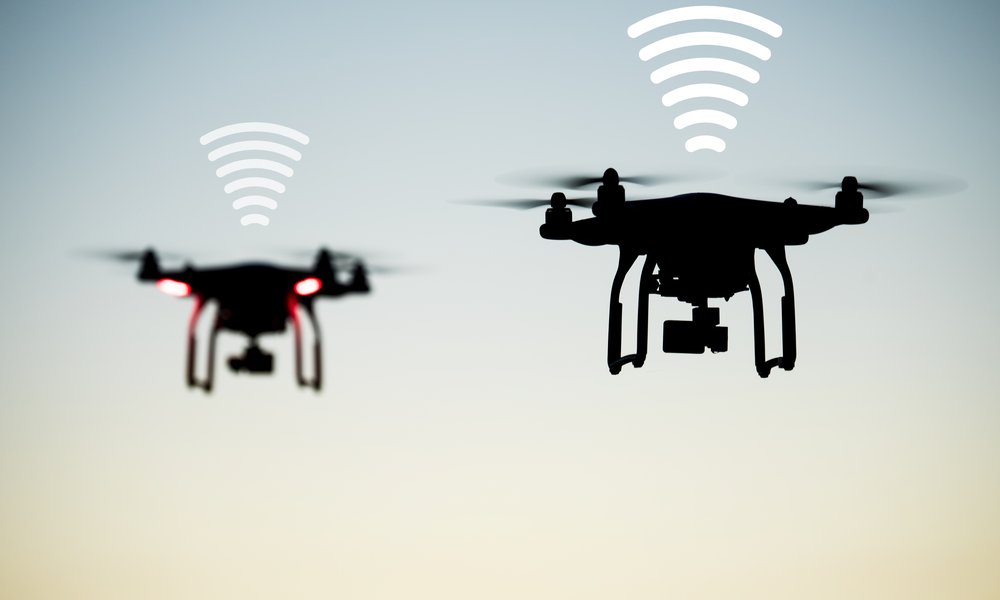
If everything moves, the network has to move with it
The Autonomous and sustainable moving IoT ecosystems – Phase III Catalyst, which showcased at DTW Ignite in June 2026, addresses one of the most urgent challenges facing CSPs as moving IoT ecosystems scale: how to deliver assured, low-latency and sustainable services to assets that are constantly on the move. Autonomous vehicles, drones, delivery robots and mobile industrial assets all require continuous connectivity, real-time orchestration and predictable performance as they move across environments.
This creates a level of complexity that traditional network operations cannot manage effectively. Static configurations, rule-based automation and manual intervention are not sufficient to handle the dynamic, large-scale nature of these systems.
At the same time, operators face increasing pressure to control energy consumption and reduce environmental impact. As the number of connected devices continues to grow, unmanaged expansion risks driving higher costs and a larger carbon footprint.
There is also a clear commercial opportunity. Enterprises are looking for more than connectivity. They require assured outcomes, real-time responsiveness and the ability to integrate network capabilities into their operations. Without a cohesive and intelligent approach, CSPs cannot fully capture the value of these emerging ecosystems.
This Catalyst introduces an AI-driven platform designed to orchestrate autonomous moving IoT ecosystems at scale.
At its core is an event-streaming fabric that continuously ingests telemetry, network events and service usage data from moving assets and the network. This real-time signal layer feeds an AI-driven orchestration engine that automates the “follow the thing” process across distributed cloud and edge environments, dynamically coordinating connectivity, compute and IoT services as assets move.
When a drone, autonomous vehicle, delivery robot or mobile industrial asset changes location or service requirements, the platform can discover available services at the nearest edge node, negotiate optimal network resources, orchestrate the required 5G slice and place workloads at the most appropriate MEC location. For example, if a drone activates a high-definition camera mid-flight, machine learning models can predict the increased bandwidth demand, proactively instantiate the right 5G slice and deploy video analytics functions close to the asset to maintain ultra-low latency performance.
The solution combines real-time transport and service assurance, predictive analytics and energy-aware insights. It is designed to keep video, telemetry and command-and-control flows stable as devices move, forecast congestion or degradation before it affects service, and support carbon-aware routing, workload placement and sustainability-led operational decisions.
It also exposes network capabilities to enterprises through CAMARA APIs and TM Forum Open APIs, enabling standardized, programmable requests for 5G standalone slices, quality-of-service profiles, real-time usage visibility and sustainability metrics. This creates a clearer commercial link between enterprise intent, network configuration, delivered performance and usage-based or mission-based charging.
The impact extends across operational, commercial and environmental dimensions.
For CSPs, the platform opens up new monetization models beyond basic connectivity. On-demand network slices, edge inference, real-time video analytics, anomaly detection, assured drone corridors, autonomous logistics lanes and industrial robotics control can become chargeable, API-triggered services. Real-time usage exposure supports outcome-based charging, mission-based billing and dynamic pricing aligned with the value delivered.
Operational efficiency also improves. AI-native network and service assurance and closed-loop automation can provide visibility across RAN, transport, MEC and cloud, correlate events, then take corrective action such as rerouting traffic, adjusting resource allocations or recommending operator interventions. This helps reduce manual effort, accelerate service rollout and improve reliability for mission-critical moving IoT use cases.
For the wider industry, the Catalyst provides a practical blueprint for managing complex IoT ecosystems using standard architectures and APIs. It demonstrates how intent-based orchestration, event-driven data, predictive assurance and network capability exposure can be combined to support scalable, interoperable solutions for sectors such as transportation, smart cities, utilities, public safety, agriculture, ports and logistics.
From a sustainability perspective, the ability to optimize energy usage across network and edge environments is increasingly important. The solution supports carbon-aware routing, greener slice configuration, efficient edge workload placement and automated ESG reporting, giving enterprises greater visibility into the environmental impact of their connectivity choices while helping CSPs avoid a linear increase in energy consumption as IoMT scales.
As Nektarios Georgalas, Innovation Principal, Data and AI at BT Group, explains, the strategic importance of the Catalyst lies in orchestrating “multiple autonomous layers working in unison: the network, the moving device, the edge compute environment, and the service logic itself.” He adds that Phase III takes the work “from an innovative MVP to commercialization” by identifying how CSPs can create differentiated value-added services and new revenue opportunities across B2B2X relationships.
The Catalyst is also aligned with and contributing to TM Forum assets. It uses the Open Digital Architecture as the blueprint for modular, interoperable integration across network, edge and IoT service management; TM Forum Open APIs to connect the orchestrator with OSS/BSS, inventory and partner platforms; and the Business Architecture Framework’s value stream approach to capture how value is created across the Internet of Moving Things ecosystem. The team is also contributing to the Event-Driven Architecture and AsyncAPI workstream (Open API Collaboration Project), while drawing on TM Forum IoT and sustainability frameworks to support energy efficiency, carbon impact measurement and reusable guidance for autonomous moving IoT management at scale.

